Guide Navigation

Jump to any section of this comprehensive BlackOps Market tutorial

7-Step Setup Process

Follow this structured path to complete BlackOps Market setup securely

STEP 1
🌐

Tor Browser Setup

Download, install and configure Tor Browser with maximum security settings

⏱ 5 min Easy
Start Step
STEP 2
🔐

PGP Encryption

Generate 4096-bit PGP keys for encrypted communications

⏱ 10 min Medium
Start Step
STEP 3
💱

Monero Wallet

Setup Monero wallet for private cryptocurrency transactions

⏱ 15 min Medium
Start Step
STEP 4
👤

Account Creation

Register on BlackOps Market with strong credentials

⏱ 5 min Easy
Start Step
STEP 5
🛡️

Security Practices

Enable 2FA and configure all security features

⏱ 5 min Easy
Start Step
STEP 6
🛒

Making Orders

Learn how to place orders safely with escrow protection

⏱ 3 min Easy
Start Step
STEP 7

OpSec Guide

Advanced operational security best practices

⏱ 2 min Easy
Start Step

System Requirements

Ensure your system meets these minimum requirements before starting

💻

Operating System

  • Windows 10+
  • macOS 10.15+
  • Linux (any distro)
🧠

RAM Memory

  • Minimum 4GB RAM
  • Recommended 8GB+
💾

Storage Space

  • 10GB free space
  • 150GB+ for full node
🌐

Internet Connection

  • Stable broadband
  • VPN recommended

Step 1: Tor Browser Setup and Configuration

The Tor Browser is your gateway to accessing BlackOps Market securely and anonymously. Proper installation and configuration are critical for protecting your identity and maintaining operational security throughout your marketplace experience.

Tor Browser configuration interface showing security settings
Tor Browser security configuration panel

Understanding Tor Network Technology

The Tor network provides anonymity through a distributed relay system that encrypts your internet traffic multiple times and routes it through volunteer-operated servers worldwide. Each relay only knows the previous and next hop in the chain, making it virtually impossible to trace your connection back to your physical location. This technology is essential for accessing BlackOps Market while protecting your identity from surveillance and traffic analysis.

Security Levels Comparison

Different security tool combinations provide varying levels of protection. Choose your security level based on your threat model and requirements.

Level Tools Required Protection Rating
Basic Tor Browser ⭐⭐☆☆☆
Medium Tor + VPN ⭐⭐⭐⭐☆
Advanced Tor + VPN + PGP ⭐⭐⭐⭐⭐

Step-by-Step Installation Guide

1

Download Tor Browser

Visit torproject.org/download and download Tor Browser 13.0 or newer. Never use third-party download sites - they may distribute compromised versions.

💡 Pro tip: Always verify the PGP signature of your download to ensure authenticity and prevent man-in-the-middle attacks.
2

Verify Download Signature

Download the .asc signature file and verify using GnuPG. This crucial step ensures your download hasn't been tampered with.

⚠️ Warning: Skip this step at your own risk. Unverified downloads could contain malware or backdoors.
3

Install Tor Browser

Run the installer for your operating system. Choose a secure installation location and avoid auto-start features.

💡 Pro tip: On macOS, right-click and select "Open" to bypass Gatekeeper warnings for the first launch.
4

Configure Security Settings

Launch Tor Browser and click the shield icon. Set security level to "Safest" for maximum protection against attacks.

Success: "Safest" mode disables JavaScript by default and provides maximum fingerprinting protection.

Verifying Download Authenticity

Before installing Tor Browser, you should verify the cryptographic signature of the downloaded file to ensure it hasn't been tampered with during download. The Tor Project provides PGP signatures for all releases. Download both the browser package and its corresponding .asc signature file, then verify using GnuPG or your operating system's verification tools. This extra step prevents sophisticated man-in-the-middle attacks that could compromise your anonymity.

Installation Process for Different Operating Systems

Windows Installation

On Windows systems, download the .exe installer and run it with administrator privileges. Choose an installation directory that doesn't reveal sensitive information in its path. During installation, you can select to create desktop shortcuts, but avoid using auto-start features that might compromise operational security. After installation, verify that Windows Defender or your antivirus hasn't quarantined any Tor components.

macOS Installation

For macOS users, download the .dmg disk image file. Open the image and drag the Tor Browser application to your Applications folder. On first launch, macOS may display a security warning because Tor Browser isn't distributed through the App Store. Right-click the application and select "Open" to bypass this protection. Ensure your macOS security settings allow applications from identified developers.

Linux Installation

Linux users should download the .tar.xz archive file. Extract it to your preferred location using the command line or file manager. Navigate to the extracted directory and run ./start-tor-browser.desktop to launch. For additional security, consider running Tor Browser in a dedicated virtual machine or using Tails OS, which routes all network traffic through Tor by default.

Initial Configuration and Security Settings

Upon first launch, Tor Browser presents a connection dialog. For most users, clicking "Connect" is sufficient. However, if you're in a country that blocks Tor, you may need to configure bridge relays to circumvent censorship. Navigate to Settings > Connection to configure bridges if necessary. After connecting successfully, immediately adjust security settings before browsing any websites.

Setting Security Level to Safest

Click the shield icon in the upper-right corner of the browser window and select "Security Settings." Set the security level to "Safest" for maximum protection when accessing BlackOps Market. This disables JavaScript by default, prevents automatic media playback, and enforces strict security policies that protect against browser fingerprinting and exploit-based attacks. While this may break some websites, it's essential for marketplace security.

Configuring Privacy Preferences

Access the preferences menu (three horizontal lines in the upper-right corner) and review all privacy settings. Ensure that "Do Not Track" is enabled, history is set to never remember, and cookies are configured to be deleted when Tor Browser closes. Disable the option to save passwords and form data, as these features create unnecessary security risks when using darknet marketplaces like BlackOps.

Understanding NoScript Extension

Tor Browser includes the NoScript extension for granular script control. Click the NoScript icon to see blocked scripts on any page. For BlackOps Market, you may need to temporarily allow scripts from the .onion domain to use marketplace features. Never globally enable JavaScript, as this significantly reduces your anonymity and exposes you to potential browser-based attacks.

Letterboxing and Fingerprinting Protection

Tor Browser implements letterboxing, which adds margins to your browser window to make all users appear to have common screen resolutions. This prevents websites from identifying you based on your unique screen dimensions. Never maximize the browser window or resize it, as this defeats fingerprinting protection. The default window size provides optimal privacy while maintaining usability.

Disabling Dangerous Features

Navigate to about:config (type in the address bar) and search for media.peerconnection.enabled. Set this value to false to prevent WebRTC leaks that could expose your real IP address. Also disable WebGL by setting webgl.disabled to true. These technologies can be exploited to compromise your anonymity even when using Tor properly.

Updating Tor Browser Regularly

The Tor Project releases security updates frequently to address newly discovered vulnerabilities. Check for updates weekly by clicking the menu icon and selecting "About Tor Browser." Install updates immediately when they become available. Running outdated versions exposes you to known exploits that adversaries could use to compromise your system or de-anonymize your traffic.

Testing Your Tor Connection

Before accessing BlackOps Market, verify your Tor connection is working correctly by visiting check.torproject.org. This page confirms whether you're successfully routing traffic through the Tor network. If the page indicates you're not using Tor, troubleshoot your connection before proceeding to access any .onion sites.

Circuit Display and IP Verification

Click the padlock icon in the address bar and select "Connection not secure" > "More information" to view your current Tor circuit. This shows the three relay nodes your traffic passes through before reaching its destination. Each time you visit a new .onion address, Tor creates a fresh circuit for isolation. You can manually request a new circuit by clicking the new identity button if you suspect your connection has been compromised.
Step 2: PGP Encryption Setup and Key Management

Pretty Good Privacy (PGP) encryption is mandatory for all BlackOps Market communications. This cryptographic system ensures that only intended recipients can read your messages, protecting sensitive information like shipping addresses and personal details from interception.

PGP key generation interface in Kleopatra
PGP key pair generation using Kleopatra

What is PGP Encryption and Why It Matters

PGP (Pretty Good Privacy) is a cryptographic system that uses public-key cryptography to encrypt and decrypt messages. Each user generates a key pair: a public key that others use to encrypt messages to you, and a private key that only you possess to decrypt those messages. BlackOps Market requires PGP because it ensures end-to-end encryption where even marketplace administrators cannot read your communications.

Choosing PGP Software

Several reputable PGP implementations are available depending on your operating system. For Windows users, Gpg4win with Kleopatra provides an intuitive graphical interface. macOS users should install GPG Suite. Linux users typically have GnuPG pre-installed and can use command-line tools or graphical frontends like Seahorse. All these tools are open-source and regularly audited for security vulnerabilities.

Installing GnuPG and Kleopatra on Windows

Download Gpg4win from the official website and run the installer. During installation, ensure you select Kleopatra (certificate manager) and GpgOL (Outlook plugin if needed). The installation wizard will guide you through component selection. After installation, launch Kleopatra from your Start menu to begin the key generation process. Verify the installer's digital signature before running to prevent malware infections.

Installing GPG Suite on macOS

Visit the GPG Suite website and download the latest version compatible with your macOS version. Open the .dmg file and follow the installation prompts. GPG Suite integrates with Apple Mail but also includes GPG Keychain for standalone key management. After installation, launch GPG Keychain to create your first PGP key pair. macOS may require you to allow system extensions in Security & Privacy settings.

Using GnuPG on Linux Systems

Most Linux distributions include GnuPG by default. Open a terminal and type "gpg --version" to verify installation. If not present, install using your package manager (apt install gnupg on Debian/Ubuntu, yum install gnupg on Red Hat/CentOS). For graphical key management, install Seahorse (apt install seahorse) or use command-line tools directly for maximum control over cryptographic operations.

Generating Your First PGP Key Pair

In Kleopatra, click "New Key Pair" and select "Create a personal OpenPGP key pair." Enter your name (use a pseudonym for BlackOps Market, not your real identity) and an email address you control. Click "Advanced Settings" to configure key parameters. Set key algorithm to RSA and key size to 4096 bits for maximum security. BlackOps Market requires minimum 4096-bit keys for account registration.

Configuring Key Expiration Dates

Set an expiration date for your key, typically 2-3 years in the future. Expiration dates prevent compromised keys from being used indefinitely if you lose access to them. You can always extend the expiration date before it expires, but you cannot do so after. For marketplace use, annual key rotation is recommended as a security best practice to limit exposure if keys are compromised.

Creating Strong Passphrases

When prompted for a passphrase, create a strong, unique phrase with at least 20 characters combining uppercase, lowercase, numbers, and symbols. This passphrase protects your private key from unauthorized use if someone gains access to your computer. Never use dictionary words or personal information. Consider using a password manager like KeePassXC to generate and store complex passphrases securely.

Understanding Public and Private Keys

After generation completes, you'll have two keys: your public key (safe to share with anyone) and your private key (must be kept secret). Your public key is what you'll upload to BlackOps Market and share with vendors to receive encrypted messages. Your private key remains on your computer and is used to decrypt messages sent to you. Never share or export your private key unless creating a secure backup.

Exporting Your Public Key

Right-click your newly created key in Kleopatra and select "Export." Save the public key as a .asc file. Open this file in a text editor to see the ASCII-armored public key block beginning with "-----BEGIN PGP PUBLIC KEY BLOCK-----". This entire text block is what you'll paste into BlackOps Market during account registration. Copy it carefully, including the BEGIN and END markers.

Backing Up Your Private Key Securely

Create a backup of your private key immediately after generation. Right-click your key in Kleopatra and select "Export Secret Keys." Save this to encrypted external media like a USB drive with full-disk encryption, not to cloud storage. Store the backup in a physically secure location. If you lose your private key, you'll lose access to all encrypted messages and potentially your BlackOps Market account permanently.

Testing Encryption and Decryption

Before using PGP with BlackOps Market, practice encrypting and decrypting messages. In Kleopatra, click "Sign/Encrypt" and create a test message. Encrypt it to your own public key, then decrypt it using your private key. This verifies your setup works correctly and familiarizes you with the encryption workflow you'll use when communicating with vendors.

Importing Vendor Public Keys

When you purchase from BlackOps Market vendors, you'll need to import their public keys to encrypt shipping addresses. Vendors display their public keys on profile pages. Copy the entire key block and in Kleopatra, click "Import" and paste the key. Verify the key fingerprint matches what's displayed on the vendor's profile before encrypting any sensitive information.

Verifying Key Fingerprints

Every PGP key has a unique fingerprint—a long hexadecimal string that identifies it. Always verify fingerprints when importing keys to prevent man-in-the-middle attacks. BlackOps Market displays vendor key fingerprints prominently. Compare the fingerprint of the imported key with what's shown on the marketplace. If they don't match exactly, the key may be fraudulent.

Key Management Best Practices

Regularly update your PGP software to patch security vulnerabilities. Never use web-based PGP encryption tools, as they can compromise your private key. Use separate keys for different purposes (one for BlackOps Market, another for email, etc.). Sign your public key with trusted keys to build a web of trust. Revoke compromised keys immediately and generate new ones.

Step 3: Monero Wallet Configuration and Security

BlackOps Market exclusively uses Monero (XMR) for all transactions due to its superior privacy features. Properly setting up and securing your Monero wallet is essential for protecting your financial privacy and ensuring smooth transactions on the marketplace.

Why BlackOps Market Uses Monero Exclusively

Unlike Bitcoin and other cryptocurrencies with transparent blockchains, Monero implements privacy by default through ring signatures, stealth addresses, and RingCT (Ring Confidential Transactions). These technologies hide sender, receiver, and transaction amounts from blockchain analysis. BlackOps Market mandates Monero-only payments because Bitcoin transactions are completely traceable by blockchain forensics companies and law enforcement agencies.

Downloading Official Monero Wallet Software

Always download Monero wallet software from the official GetMonero.org website. The Monero GUI (Graphical User Interface) wallet is recommended for beginners, while advanced users may prefer the CLI (Command Line Interface) wallet for greater control. Verify the SHA256 hash of your download against the hashes published on the official site to ensure authenticity.

Installing Monero GUI Wallet

Run the installer for your operating system. On Windows, extract the downloaded archive to a permanent location like C:\Monero. On macOS, open the .dmg and drag the application to your Applications folder. On Linux, extract the tarball and run the monero-wallet-gui executable. The first launch will prompt you to choose wallet mode and select blockchain storage location.

Choosing Between Simple and Advanced Modes

The Monero GUI offers Simple mode (uses remote nodes, faster setup) and Advanced mode (downloads full blockchain, maximum privacy). For BlackOps Market use, Simple mode is acceptable initially, but Advanced mode with your own node provides better privacy by not revealing which transactions you're interested in to remote node operators. If using Simple mode, connect to trusted remote nodes only.

Creating a New Monero Wallet

Select "Create new wallet" from the main menu. Choose a descriptive wallet name that doesn't reveal its purpose. The software will generate a 25-word mnemonic seed phrase that represents your private keys. This seed phrase is the master key to your funds—anyone with access to it can steal your Monero. Write it down on paper and store in a physically secure location like a safe or safety deposit box.

Securing Your Mnemonic Seed Phrase

Never store your 25-word seed phrase digitally (no screenshots, no text files, no cloud storage). Write it on paper with clear, legible handwriting. Create multiple copies and store in separate secure locations to protect against fire, flood, or theft. Consider using metal backup plates designed for cryptocurrency recovery phrases, which resist fire and water damage. Test your backups by restoring wallets on separate devices.

Setting a Strong Wallet Password

After writing down your seed phrase, you'll create a wallet password that encrypts the wallet file on your computer. Use a strong, unique password with at least 20 characters. This password protects your wallet if someone gains physical or remote access to your device, but it cannot recover your funds if you lose the seed phrase. Your seed phrase is the ultimate backup mechanism.

Understanding Monero Blockchain Synchronization

If using Advanced mode, your wallet must download the entire Monero blockchain (currently over 150GB) before displaying your balance accurately. This process can take days depending on your internet connection speed. The blockchain is stored locally and verifies all transactions independently. During synchronization, you can create receive addresses but cannot see your balance or send transactions until fully synced.

Using Remote Nodes for Faster Setup

Simple mode and Advanced mode with remote nodes skip blockchain download by connecting to someone else's synchronized node. While faster, this reveals your IP address and which transactions you're interested in to the node operator. For better privacy, use remote nodes over Tor by configuring your wallet's network settings. Trusted remote nodes include those operated by the Monero community and listed on GetMonero.org.

Generating Receive Addresses

Click the "Receive" tab to view your Monero address. Unlike Bitcoin, Monero addresses are much longer (95 characters starting with "4"). You can generate subaddresses for different purposes—create a dedicated subaddress for BlackOps Market deposits to separate marketplace funds from other Monero holdings. Each transaction to a subaddress uses a unique stealth address on the blockchain, enhancing privacy.

Acquiring Monero from Exchanges

Purchase Monero from cryptocurrency exchanges like Kraken, Binance, or privacy-focused exchanges like TradeOgre and LocalMonero (peer-to-peer). For maximum privacy, avoid KYC (Know Your Customer) exchanges that require identity verification. Buy Bitcoin from a KYC exchange if necessary, then swap to Monero using instant exchange services like ChangeNow or FixedFloat, which don't require accounts or identity verification.

Sending Monero to Your Wallet

After purchasing Monero on an exchange, withdraw it to your wallet address. Copy your address from the Receive tab (double-check every character to prevent sending to wrong address). Paste into the exchange withdrawal form. Monero confirmations typically take 2-3 minutes per block. Wait for at least 10 confirmations (20-30 minutes) before your exchange shows the withdrawal as complete. Your wallet will update after synchronizing to the block containing your transaction.

Understanding Monero Transaction Privacy Features

Every Monero transaction uses ring signatures that mix your transaction with 15 others, making it impossible to determine which output was actually spent. Stealth addresses ensure each transaction goes to a one-time address, preventing blockchain observers from linking multiple payments to the same recipient. RingCT hides transaction amounts, so blockchain analysis cannot determine how much Monero was sent in any transaction.

Transaction Fees and Priority Levels

Monero uses dynamic fees that adjust based on network congestion. When sending transactions, you can choose between slow, normal, fast, and fastest priority levels. Normal priority is typically sufficient for marketplace deposits. Higher priorities include larger fees and get confirmed faster. Current Monero fees are extremely low (typically under $0.01) compared to Bitcoin, making small transactions economically viable.

Wallet Backup and Recovery Procedures

Beyond your seed phrase, regularly export wallet keys from Settings > Keys. Save your primary address, secret view key, and secret spend key in encrypted format on external media. If you use wallet passwords or custom node configurations, document these settings. To restore a wallet, you only need the 25-word seed phrase—enter it during wallet creation and your wallet will regenerate all addresses and scan the blockchain for your transactions.

Wallet Security Hardening

Enable wallet encryption if not already enabled. Configure auto-lock to require password after periods of inactivity. Never use wallet software on compromised or public computers. Consider running your Monero wallet in a virtual machine for isolation from your main operating system. For large balances, use hardware wallets like Ledger or Trezor that support Monero, keeping private keys on dedicated hardware devices.

Testing Small Transactions First

Before depositing large amounts to BlackOps Market, test the process with a small amount. Send a minimal Monero transaction to your marketplace deposit address and verify it arrives correctly. This confirms your wallet is functioning properly and you understand the deposit process. Only after successful small transactions should you deposit larger amounts needed for purchases.

Step 4: Creating Your BlackOps Market Account

Account creation on BlackOps Market requires careful attention to security details. Follow these steps precisely to ensure your account is protected with all available security measures from the beginning.

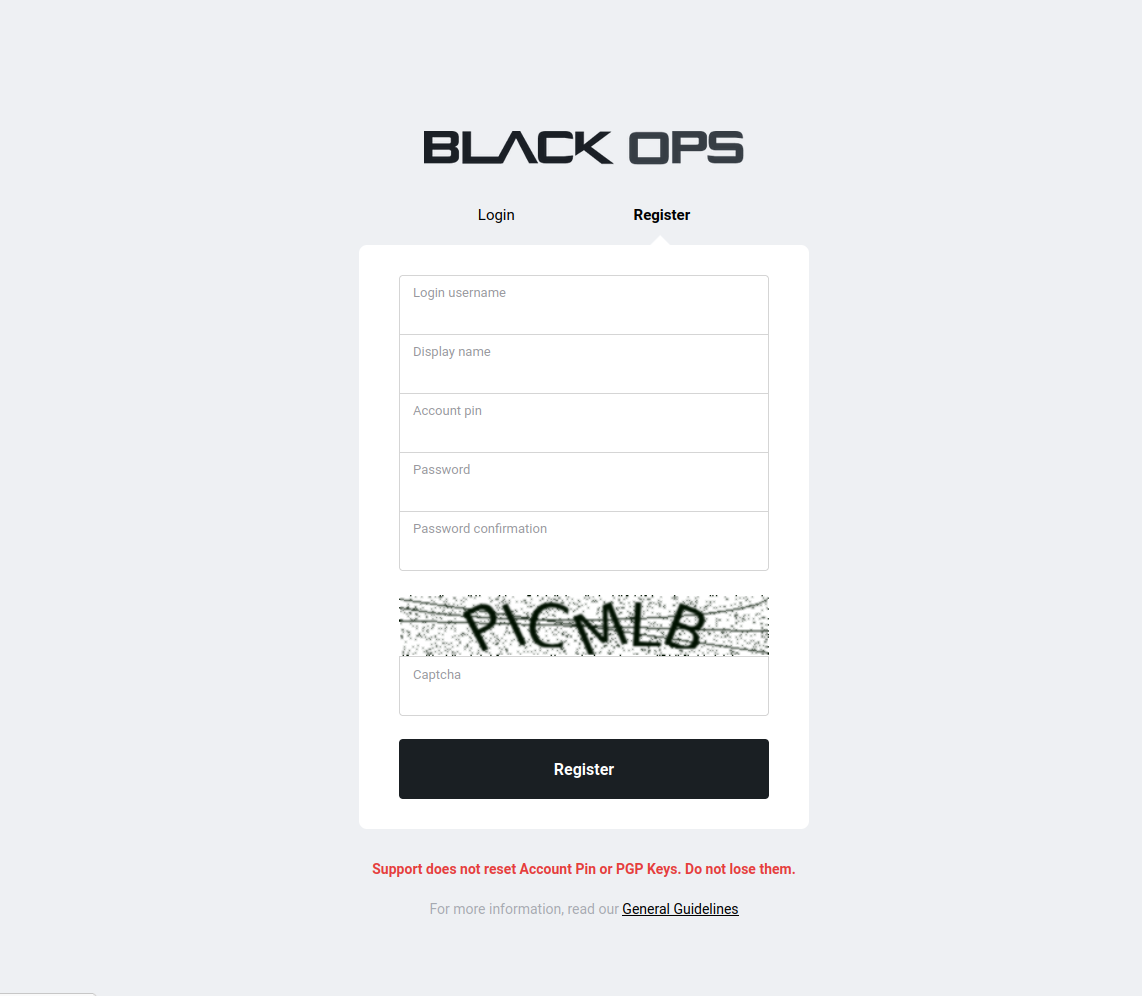
BlackOps Market registration page
BlackOps Market secure registration interface

Accessing the Registration Page

Open Tor Browser and navigate to one of the verified BlackOps Market onion links from the official links section on the homepage. Verify the URL carefully—phishing sites use similar addresses to steal credentials. Bookmark the legitimate link after successful access. On the login page, click the "Register" or "Create Account" button to begin the registration process.

Choosing a Secure Username

Select a username that has no connection to your real identity, other online accounts, or personal information. Avoid usernames you've used elsewhere, as they can be linked through database breaches and forum posts. Use random combinations of letters and numbers, or generate usernames with password managers. Your username is publicly visible on the marketplace, so treat it as part of your operational security.

Creating an Extremely Strong Password

Generate a password with at least 20 characters using a password manager like KeePassXC or Bitwarden. Include uppercase letters, lowercase letters, numbers, and special symbols. Never reuse passwords from other services. Your BlackOps Market password is the first line of defense for your account and funds. Store it exclusively in an encrypted password manager, never in browser storage or plain text files.

Entering Your PGP Public Key

Paste your entire PGP public key (created in Step 2) into the designated field. This includes the "-----BEGIN PGP PUBLIC KEY BLOCK-----" header and "-----END PGP PUBLIC KEY BLOCK-----" footer. BlackOps Market validates the key format and bit length during registration. The marketplace uses this key to encrypt sensitive messages to you, and you'll use your private key to decrypt them. Without a valid PGP key, account creation will fail.

Setting Up Anti-Phishing Phrase

Create a unique anti-phishing phrase that BlackOps Market will display after you log in. This phrase helps you verify you're on the legitimate site. If you see a different phrase or no phrase, you're on a phishing site. Choose something memorable but not personally identifiable. Examples: "Blue elephant dances at midnight" or "Quantum cryptography protects privacy." Never share this phrase with anyone.

Saving Your Mnemonic Recovery Phrase

After completing registration details, BlackOps Market generates a mnemonic recovery phrase (typically 12-16 words). Write this phrase on paper in the exact order displayed. This phrase can restore account access if you forget your password or lose 2FA. Store it as securely as your Monero seed phrase—in a safe, safety deposit box, or other physically secure location. Never store it digitally or share it with anyone claiming to be marketplace support.

Enabling TOTP Two-Factor Authentication

Navigate to account security settings immediately after registration. Enable TOTP (Time-based One-Time Password) 2FA using an authenticator app like Aegis (Android), Raivo OTP (iOS), or andOTP. Scan the QR code displayed by BlackOps Market with your authenticator app. Enter the 6-digit code generated to verify setup. Store backup codes in encrypted format in case you lose access to your authenticator device.

Configuring PGP-Based Two-Factor Authentication

BlackOps Market offers PGP-based 2FA as a second authentication factor. When enabled, the marketplace sends an encrypted challenge message during login that you must decrypt with your private key and enter the response. This provides additional security even if someone steals your password and TOTP codes. Enable both TOTP and PGP 2FA for maximum account protection.

Verifying Email Address (Optional)

Some marketplace features may require email verification. If providing an email address, use a dedicated anonymous email account created specifically for BlackOps Market. Services like ProtonMail or Tutanota offer encrypted email without identity verification. Never use your personal email address. Consider using temporary email services or create a new anonymous account that's not linked to any other online activity.

Setting Account Security Preferences

Review all security settings in your account preferences. Enable automatic logout after inactivity (recommend 15-30 minutes). Require 2FA for sensitive operations like withdrawals and address changes. Set up login notifications to detect unauthorized access attempts. Configure IP whitelisting if you always access from the same location through Tor. Each additional security measure reduces your risk of account compromise.

Initial Account Security Checklist

Before depositing funds, verify: (1) Strong unique password saved in password manager, (2) PGP public key uploaded and tested, (3) Both TOTP and PGP 2FA enabled, (4) Mnemonic recovery phrase written down and stored securely, (5) Anti-phishing phrase configured and remembered, (6) Email address verified if using email features, (7) All security settings reviewed and maximized. Only proceed to funding your account after completing this checklist.

Understanding Account Tiers and Limitations

New BlackOps Market accounts may have temporary limitations on withdrawal amounts or vendor messaging to prevent fraud and abuse. These limitations typically lift after completing your first successful transaction and building positive reputation. Review the account information section to understand current tier status and any applicable restrictions. Higher tiers unlock additional features like early finalization and increased withdrawal limits.

Configuring Privacy Settings

Set your profile to private visibility so only vendors you contact can see your purchase history and feedback. Disable any data sharing options that send usage analytics to the marketplace (though BlackOps operates with zero-logging, minimize any potential data exposure). Configure notification preferences to minimize information stored about your activity patterns. Every privacy enhancement reduces potential attack surface.

Step 5: Security Best Practices for BlackOps Market

Following comprehensive security practices is essential for protecting your identity, funds, and personal safety when using BlackOps Market. These guidelines represent industry best practices developed through years of marketplace operational security experience.

Never Reuse Passwords Across Services

Password reuse is one of the most common security failures. When one service experiences a data breach, attackers use credential stuffing attacks to try those same credentials on other platforms. Use a unique password for BlackOps Market that you've never used anywhere else. Password managers make generating and storing unique passwords practical. If you must memorize passwords, use passphrases constructed from random words combined with numbers and symbols.

Always Verify Onion URLs Before Logging In

Phishing attacks are the primary threat to marketplace users. Attackers create fake sites with URLs similar to legitimate ones, stealing credentials and funds. Before entering your username and password, verify every character of the .onion URL against your saved bookmark. Check that your anti-phishing phrase displays correctly after login. If anything seems wrong, assume it's a phishing attempt and navigate away immediately.

Use Unique Email Addresses for Each Service

If BlackOps Market requires email verification, create a dedicated anonymous email account used only for marketplace communications. This isolates potential email-based attacks and prevents correlation with your other online activities. Services like ProtonMail, Tutanota, or Guerrilla Mail (temporary addresses) work well. Never use work or personal email addresses that could reveal your real identity.

Enable All Available Security Features

BlackOps Market provides multiple security layers—enable them all. Mandatory PGP encryption, dual 2FA (TOTP + PGP), anti-phishing phrases, automatic logout, withdrawal confirmations, and login notifications all contribute to comprehensive account protection. The inconvenience of additional security steps is minimal compared to the consequences of account compromise. Configure maximum security settings before depositing funds.

Regularly Update Security Software

Keep all security-critical software current: Tor Browser, PGP tools, Monero wallet, operating system, and antivirus software. Security updates patch vulnerabilities that attackers exploit. Enable automatic updates where available, or manually check weekly. Outdated software is one of the easiest ways for attackers to compromise your system. Subscribe to security mailing lists for Tor and Monero to stay informed about critical updates.

Practice Proper PGP Hygiene

Always verify PGP key fingerprints before encrypting sensitive information. When a vendor updates their PGP key, verify the new key through multiple channels before trusting it. Regularly backup your private key to encrypted external media. Set key expiration dates and rotate keys annually. Never use web-based PGP tools that could capture your private key. Periodically test decryption to ensure your backups work correctly.

Secure Your Monero Wallet

Encrypt your Monero wallet with a strong password. Store seed phrases offline in physically secure locations. Never take screenshots of seed phrases or QR codes. Use hardware wallets for large balances. Connect to your own Monero node rather than remote nodes when possible for maximum privacy. Enable wallet auto-lock and require password for transactions. Maintain multiple backups of seed phrases in geographically separate secure locations.

Implement Network-Level Security

While Tor provides anonymity, additional network security adds defense in depth. Consider using a VPN before connecting to Tor (VPN → Tor) if your threat model includes ISP monitoring. Disable IPv6 to prevent potential leaks. Configure firewall rules to prevent non-Tor traffic. On Linux, use application firewalls like ufw to restrict which applications can access the network. These measures prevent accidental de-anonymization through misconfiguration.

Maintain Physical Device Security

Enable full-disk encryption on all devices used to access BlackOps Market (BitLocker on Windows, FileVault on macOS, LUKS on Linux). Use strong encryption passwords different from your login password. Enable secure boot and BIOS passwords. Lock your screen when stepping away. Consider using a dedicated device exclusively for marketplace access that's never used for personal activities. Physical security is as important as digital security.

Recognize and Avoid Phishing Attempts

Attackers send phishing messages through marketplace private messages, emails, and forum posts. Never click links in messages claiming to be from BlackOps Market support. Staff will never ask for your password, 2FA codes, or private keys. Legitimate support only occurs through official marketplace support tickets. If a message creates urgency or threatens account closure, it's almost certainly phishing. Always navigate manually to the marketplace using bookmarked links.

Practice Operational Security (OpSec) Fundamentals

Never discuss marketplace activities on social media, public forums, or with people you don't trust completely. Don't brag about purchases or share identifying details. Avoid patterns that could be correlated with your real identity. Use separate pseudonyms for different online activities. Clear browser data after each session. Never screenshot marketplace pages that might contain sensitive information. Treat OpSec as ongoing discipline, not a one-time checklist.

Secure Communication Practices

All communications with vendors must use PGP encryption. Never send shipping addresses or personal information in plaintext. Verify vendor PGP keys before encrypting messages. Use the marketplace's encrypted messaging system rather than external communication channels. After finalizing orders, securely delete messages containing sensitive information. Consider using disappearing messages if the marketplace offers that feature.

Monitor Account Activity Regularly

Check your account login history frequently for unauthorized access attempts. Review transaction history to verify all activity is legitimate. Enable email or PGP notifications for account events like logins from new circuits, password changes, and withdrawals. If you notice suspicious activity, change your password immediately, verify 2FA is still enabled, and contact marketplace support through official channels.

Wallet and Fund Management Security

Only deposit amounts you need for immediate purchases. Don't store large balances in marketplace wallets—keep the majority of funds in your personal Monero wallet under your exclusive control. Withdraw funds promptly after completing purchases. Use unique deposit addresses for each transaction to prevent correlation. Regularly verify your wallet balance matches expected amounts. Report discrepancies immediately.

Backup and Recovery Preparation

Maintain current backups of all critical information: password manager databases, PGP private keys, Monero seed phrases, BlackOps Market mnemonic recovery phrases, and 2FA backup codes. Store backups in encrypted format on multiple external devices kept in physically separate secure locations. Test recovery procedures periodically to ensure backups are functional. Document recovery processes so you can restore access even under stress.

Step 6: Making Your First Order on BlackOps Market

Completing your first marketplace transaction involves several critical steps. This section guides you through the entire process from vendor research to order completion, ensuring you understand escrow protection and best practices for safe transactions.

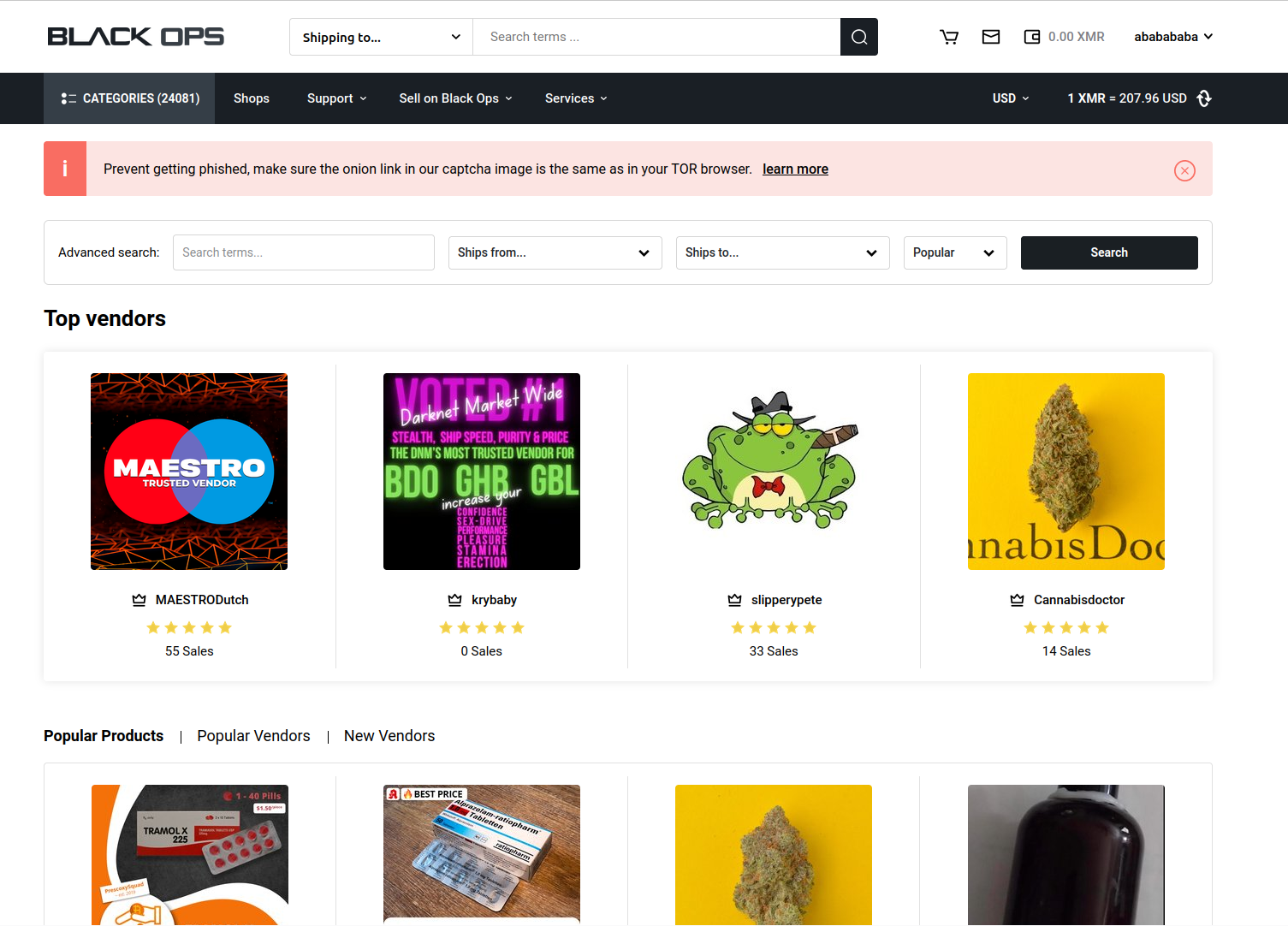
BlackOps Market vendor listing page
BlackOps Market vendor listings with verification badges

Funding Your BlackOps Market Wallet

Before purchasing, deposit Monero to your marketplace wallet. Navigate to the Wallet section and copy your unique XMR deposit address. Open your personal Monero wallet and send the desired amount to this address. BlackOps Market requires 10 confirmations before crediting your balance, which typically takes 20-30 minutes. Send slightly more than you need to cover transaction fees and potential price fluctuations. Monitor the blockchain using a Monero block explorer to track confirmation progress.

Understanding Marketplace Categories and Search

BlackOps Market organizes listings into categories for easy browsing. Use the search function to find specific products or vendors. Filters allow sorting by price, shipping location, vendor rating, and product category. Refine searches using multiple criteria to find exactly what you need. Save searches or bookmark vendor profiles for future reference. The marketplace interface is designed for efficient product discovery while maintaining security.

Researching Vendor Reputation and Reviews

Never purchase from vendors without thoroughly researching their reputation. Check vendor statistics including total sales, account age, positive feedback percentage, and dispute history. Read recent reviews carefully, paying attention to comments about product quality, shipping speed, and communication. Look for verified purchase badges on reviews to identify legitimate feedback. Avoid vendors with recent negative reviews or high dispute rates.

Evaluating Product Listings

Read product descriptions completely before ordering. Verify shipping options, estimated delivery times, and refund policies. Check if the vendor offers stealth shipping or special packaging. Review product photos (though never trust photos alone—they can be copied). Compare prices across multiple vendors for the same product. Unusually low prices may indicate scams or poor quality. Established vendors with slightly higher prices often provide better reliability.

Contacting Vendors Before Purchasing

For first-time purchases or large orders, message vendors with questions before ordering. Ask about product specifications, shipping methods, or custom requests. Evaluate vendors based on response time and communication quality. Professional, helpful responses indicate reliable vendors. Import the vendor's PGP public key and encrypt all messages containing sensitive information. Never share personal details in plaintext messages.

Understanding Escrow Protection

BlackOps Market uses 2-of-3 multisignature escrow for all transactions. When you place an order, funds are locked in escrow controlled by three keys: yours, the vendor's, and the marketplace's. Funds cannot be released without two signatures. Upon successful delivery, you and the vendor both sign to release payment. If disputes arise, marketplace moderators can intervene. Never finalize early (FE) unless you completely trust the vendor and understand the risks.

Placing Your Order

Add products to your cart and proceed to checkout. Review order details including quantity, price, and shipping options. Generate a PGP-encrypted message containing your shipping address using the vendor's public key. Paste the encrypted message block into the shipping address field. Never enter plaintext addresses. Verify order total including marketplace fees. Confirm the order to move funds from your wallet to multisig escrow.

Encrypting Shipping Information Properly

Copy the vendor's PGP public key from their profile and import it into Kleopatra or your PGP software. Compose a message with your shipping address, including name (use alias if possible), street address, city, state/province, postal code, and country. Encrypt this message to the vendor's public key. Copy the resulting encrypted block (begins with "-----BEGIN PGP MESSAGE-----") and paste into the marketplace shipping address field. Only the vendor can decrypt this information with their private key.

After Order Placement

After confirming your order, it appears in your orders dashboard with "Processing" status. The vendor receives notification and prepares shipment. Track order status changes through the marketplace interface. Vendors typically mark orders as "Shipped" within 1-3 business days. You'll receive an encrypted PGP message with tracking information if the vendor provides it. Decrypt this message with your private key to access tracking details.

Tracking Your Order

If the vendor provides tracking numbers, use them cautiously to avoid revealing your interest in specific packages. Access tracking websites through Tor Browser, never through your regular browser. Some vendors prefer not to provide tracking for operational security reasons. Typical domestic delivery takes 3-7 days, international 7-21 days. Be patient and don't panic if packages take slightly longer than estimated—shipping delays happen legitimately.

Receiving Your Package

When your order arrives, inspect packaging for signs of tampering or inspection. Open packages carefully and verify contents match your order. If something seems wrong (resealed package, missing items, incorrect products), document everything with photos before contacting the vendor. Most shipping issues are honest mistakes that vendors resolve quickly. Maintain calm, professional communication even if problems occur.

Finalizing the Transaction

After confirming you received the correct product in good condition, log into BlackOps Market and finalize the order. This releases escrow funds to the vendor by providing your signature (the vendor's signature combines with yours for the required 2-of-3). Be honest in your finalization—only finalize if truly satisfied. The marketplace typically has an auto-finalization period (14-30 days) after which funds release automatically if you don't finalize or dispute.

Leaving Honest Feedback

After finalizing, leave detailed, honest feedback about your experience. Rate product quality, shipping speed, vendor communication, and stealth packaging. Constructive reviews help other buyers make informed decisions and encourage vendors to maintain quality standards. Be specific about what was good or bad. Vendors cannot see who left specific reviews, protecting your anonymity. Your reviews contribute to marketplace reputation system integrity.

Handling Disputes

If serious problems occur (non-delivery, wrong product, damaged items), open a dispute through the marketplace dispute system before auto-finalization deadline. Provide clear evidence including photos, message screenshots, and detailed explanations. BlackOps Market moderators review disputes and make binding decisions about fund distribution. Respond promptly to moderator requests for information. Most disputes resolve in the buyer's favor when evidence supports their claim.

Withdrawing Remaining Funds

After completing transactions, withdraw unused funds from your marketplace wallet to your personal Monero wallet. Navigate to the Wallet section, enter your withdrawal address and amount, and confirm with 2FA. Withdrawals typically process within 1-2 hours. Never leave large balances in marketplace wallets—you don't control the private keys, so marketplace downtime or exit scams could result in loss of funds.

Step 7: Operational Security (OpSec) Recommendations

Advanced operational security practices protect you from sophisticated threats including traffic analysis, device compromise, and social engineering. Implementing these recommendations significantly enhances your security posture when using BlackOps Market and similar privacy-focused services.

Advanced security settings interface
BlackOps Market advanced security configuration panel

Understanding Operational Security (OpSec)

Operational security is the process of protecting individual pieces of information that could be grouped together to reveal a larger picture. In the context of BlackOps Market, OpSec involves preventing adversaries from correlating your marketplace activities with your real-world identity. Even perfect technical security fails if you reveal identifying information through behavioral patterns, social connections, or physical security lapses.

Using VPN Over Tor for Additional Anonymity

While Tor alone provides strong anonymity, the VPN → Tor → Internet configuration adds an additional layer by hiding your Tor usage from your ISP. Choose a reputable VPN provider that accepts Monero payments, requires no personal information, maintains a genuine no-logs policy, and operates outside Five/Nine/Fourteen Eyes jurisdictions. Examples include Mullvad, IVPN, and ProtonVPN. Connect to VPN first, then launch Tor Browser. Never use free VPNs, as they typically log and monetize your data.

Clearing Browser Data After Each Session

Even though Tor Browser deletes history and cookies on close, manually clear browser data after marketplace sessions for extra assurance. Click the menu icon → History → Clear Recent History → select "Everything" timeframe and check all boxes. This removes any session residue that could be forensically recovered. Also clear the Tor Browser downloads folder if you saved any files. Develop a habit of clearing data immediately after each session.

Never Discussing Orders Outside Encrypted Channels

Information you share with others represents one of the highest security risks. Never discuss BlackOps Market activities on social media, public forums, unencrypted messaging apps, or phone calls. Even telling trusted friends creates additional points of failure. If you must communicate about marketplace activities, use end-to-end encrypted messaging apps like Signal or Session, and even then, minimize details shared. Remember that "two people can keep a secret if one of them is dead."

Maintaining Physical Security of Devices

Enable full-disk encryption on all devices used for marketplace access. Use strong encryption passwords different from login passwords. Enable secure boot and BIOS/UEFI passwords to prevent boot-time attacks. Never leave devices unattended in public spaces. Lock screens when stepping away even briefly. Consider using USB hardware kill switches that physically disconnect cameras and microphones. If devices are seized, full-disk encryption provides plausible deniability and prevents easy data extraction.

Using Dedicated Devices for Marketplace Access

Consider using a separate computer or smartphone exclusively for BlackOps Market activities, never used for personal email, social media, or other identifiable activities. This compartmentalization prevents cross-contamination where malware or forensic analysis on one device could compromise marketplace security. Dedicated devices can be affordable used laptops running Tails OS from USB, which leaves no trace on the host computer.

Implementing Compartmentalization Strategies

Separate your digital life into isolated compartments with no connections between them. Use different pseudonyms, email addresses, PGP keys, and cryptocurrency wallets for different purposes. Never reuse usernames, passwords, or identifying information across compartments. If one identity is compromised, proper compartmentalization prevents adversaries from discovering your other activities. This strategy is fundamental to maintaining long-term anonymity.

Avoiding Timing Correlation Attacks

Timing patterns can correlate your marketplace activity with your real identity. Don't access BlackOps Market immediately after posting on social media from your real identity. Vary your access times rather than establishing regular patterns (like always accessing at 10 PM). Use the marketplace from different locations if possible. Sophisticated adversaries analyze timing patterns to correlate anonymous and identified activities, so randomize your behavior to prevent this analysis.

Protecting Against Traffic Analysis

While Tor encrypts content, traffic analysis can sometimes infer activity patterns. Use bridge relays if in a country that blocks Tor. Enable meek or obfs4 pluggable transports to disguise Tor traffic as regular HTTPS. Consider using Tor only from public WiFi networks rather than your home connection to prevent ISP correlation. Advanced adversaries with network visibility might perform traffic correlation attacks, so additional layers of obfuscation increase your security margin.

Secure Cryptocurrency Practices

Never purchase Monero from exchanges directly linked to your identity, then immediately deposit to BlackOps Market. Chain multiple transactions through different wallets, use cryptocurrency mixing services (though Monero's built-in privacy often makes this unnecessary), and consider converting through intermediate cryptocurrencies. Wait random time periods between transactions. Acquire cryptocurrency through peer-to-peer exchanges or Bitcoin ATMs that don't require identification for small amounts.

Managing Delivery Security

Consider using alternative delivery addresses that aren't directly linked to your home—PO boxes (though some vendors won't ship to them), mail forwarding services, or trusted friends' addresses. Never sign for packages if you can avoid it. If signing is required, use an alias that matches the shipping name. Be aware of your surroundings when retrieving packages. If law enforcement delivers a controlled delivery, you typically have the right to refuse packages without penalty—exercise that right if anything seems suspicious.

Social Engineering Defense

Attackers often use social engineering because it's easier than defeating technical security measures. Never provide personal information or credentials in response to requests, even if they appear to come from marketplace administrators. BlackOps Market staff will never ask for passwords, 2FA codes, private keys, or seed phrases. Verify all communication through official marketplace channels. Be especially suspicious of urgent messages threatening account closure or demanding immediate action—these are classic social engineering tactics.

Maintaining Cryptocurrency Transaction Privacy

When using Monero, run your own node rather than connecting to remote nodes to prevent metadata leakage about which transactions interest you. Use subaddresses for all incoming payments to prevent address reuse. Never consolidate outputs from multiple sources in a single transaction if those sources should remain unlinked. While Monero provides strong privacy by default, proper usage maximizes its protections. Consider using Monero over Tor for additional network-level privacy.

Regular Security Audits

Periodically review your entire security setup for weaknesses. Audit what personal information exists online about you using search engines and people-finder sites. Review your social media for accidental disclosure of location, schedule, or identifying details. Check your device configurations haven't reverted to insecure defaults after updates. Evaluate whether your threat model has changed and adjust security practices accordingly. Security is not a one-time setup but an ongoing process of assessment and improvement.

Understanding Your Threat Model

Different users face different threats. Casual users primarily need protection from financial scams and phishing. Vendors face higher scrutiny and need more robust OpSec. Users in highly restrictive countries face state-level adversaries with significant resources. Honestly assess who might target you and what capabilities they possess. Design your security measures to defend against realistic threats rather than either paranoid over-engineering or dangerously inadequate precautions. Tailor these recommendations to your specific situation.

Emergency Response Planning

Prepare for security incidents before they occur. Know how to quickly wipe devices if they're about to be seized (but understand that modern forensics can often recover wiped data). Maintain current backups of essential information in secure locations. Have a plan for communicating with trusted contacts if you lose access to your normal channels. Document recovery procedures for your cryptocurrency, PGP keys, and marketplace accounts. Practice executing your emergency plans so you can implement them correctly under stress.

Additional Security Resources and Tools

Expand your knowledge with these trusted resources for privacy, security, and cryptocurrency technologies. Continuous learning is essential for maintaining robust operational security.

Privacy & Anonymity Tools

  • Tor Project - Official Tor Browser and network documentation
  • Tails OS - Amnesic live operating system for maximum privacy
  • Whonix - Operating system designed for anonymity and security
  • PrivacyTools.io - Comprehensive privacy software recommendations

Encryption & PGP Tools

  • GnuPG - Free implementation of OpenPGP standard
  • Gpg4win - PGP encryption for Windows with Kleopatra
  • OpenPGP.org - OpenPGP standard documentation and guides
  • KeePassXC - Cross-platform password manager with encryption

Monero & Cryptocurrency

Security Education

Common Issues & Solutions

Quick fixes for the most common problems encountered during setup

⚠️

Tor won't connect

SOLUTION:

Use Tor bridges to bypass censorship. Go to Settings → Connection → Configure bridges. Select "obfs4" for best results in restricted regions.

🔐

PGP key won't import

SOLUTION:

Ensure you've copied the entire key block including "-----BEGIN PGP PUBLIC KEY BLOCK-----" and "-----END PGP PUBLIC KEY BLOCK-----" markers. No extra spaces or line breaks.

💱

Monero wallet stuck syncing

SOLUTION:

Switch to Simple mode and use a remote node for faster access. Go to Settings → Node and select a trusted remote node from getmonero.org list.

🚫

Can't access .onion links

SOLUTION:

Verify you're using Tor Browser (not regular browser). Check that Tor connection is active (green onion icon). Try "New Circuit for this Site" if page won't load.

🔑

2FA codes not working

SOLUTION:

Check your device's time sync. TOTP requires accurate system time. Enable automatic time sync in your device settings and try again.

💸

Deposit not showing up

SOLUTION:

Monero requires 10 confirmations (~20 minutes). Check transaction on XMR block explorer. If confirmed, wait a bit longer or contact marketplace support.

Quick Reference Checklist

Use this checklist to verify you've completed all essential security steps before using BlackOps Market.

Initial Setup

  • ✓ Tor Browser 13.0+ installed and verified
  • ✓ Security level set to "Safest"
  • ✓ JavaScript disabled by default
  • ✓ PGP software installed (GnuPG/Kleopatra)
  • ✓ 4096-bit PGP key pair generated
  • ✓ PGP private key backed up securely offline
  • ✓ Monero wallet installed and configured
  • ✓ 25-word Monero seed phrase written down
  • ✓ Authenticator app installed for 2FA

Account Security

  • ✓ BlackOps Market account created with strong unique password
  • ✓ PGP public key uploaded to marketplace
  • ✓ TOTP 2FA enabled and tested
  • ✓ PGP-based 2FA configured
  • ✓ Anti-phishing phrase set and remembered
  • ✓ Mnemonic recovery phrase stored securely
  • ✓ Verified onion links bookmarked
  • ✓ All security settings maximized
  • ✓ Privacy preferences configured

Operational Security

  • ✓ Full-disk encryption enabled on all devices
  • ✓ Password manager configured with unique passwords
  • ✓ Browser data clearing routine established
  • ✓ VPN configured (if using VPN over Tor)
  • ✓ Anonymous email address created for marketplace
  • ✓ Monero acquired through privacy-focused methods
  • ✓ Understanding of escrow and dispute processes
  • ✓ Emergency response plan documented
  • ✓ Physical security measures implemented